John Deere SS30B Seed Spreader: A Comprehensive Guide for Farmers
Getting the most from your planting season requires smart equipment choices. The John Deere SS30B seed spreader offers a compelling combination of durability, versatility, and cost-effectiveness, making it a strong contender for many farming operations. This guide will explore its features, benefits, limitations, and its place within the context of sustainable agriculture. Whether you're a seasoned farmer or just starting out, we'll help you determine if the SS30B is the right fit for your operation. For larger operations, consider the power of a larger John Deere tractor.
Understanding the John Deere SS30B
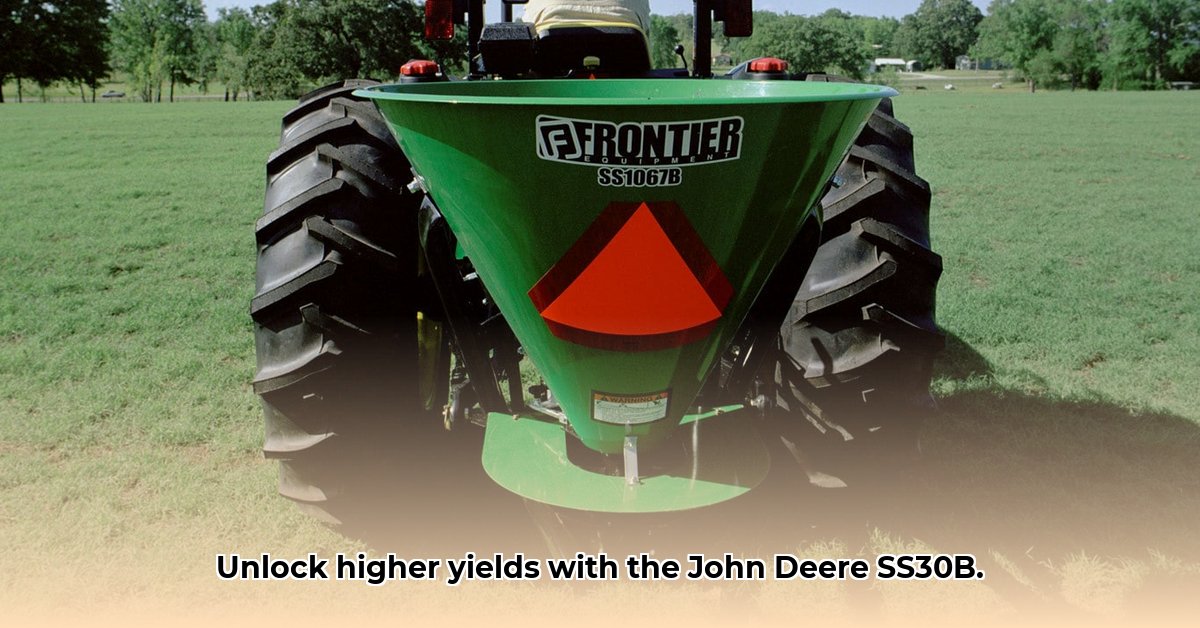
The John Deere SS30B is designed for efficient broadcast seeding (spreading seeds widely across the field) of seeds and fertilizers. Its standout feature is a polyethylene hopper, offering superior resistance to rust, chemical degradation, and overall wear compared to traditional metal alternatives. This inherent durability translates to a longer lifespan, reducing replacement costs and minimizing material waste. But how does this translate to on-the-ground effectiveness?
How the SS30B Works: Adaptability and Efficiency
Powered by your tractor's power take-off (PTO) shaft, the SS30B boasts compatibility with a wide range of tractors. Its adjustable spread patterns offer flexibility to match various field conditions and crop types. This adaptability allows for efficient seeding across diverse terrains and field sizes. However, it's crucial to acknowledge that broadcast seeding, while efficient for large areas, lacks the precision of newer, technology-driven methods. This difference in precision will be explored further. Does the versatility outweigh the precision limitations for your needs?
Pros and Cons: A Balanced Perspective
Let's consider the strengths and weaknesses of the SS30B to help you make an informed decision:
| Feature | Pros | Cons |
|---|---|---|
| Durability | Extremely long lifespan due to the robust polyethylene hopper; reduced material waste and lower replacement costs. | While durable, it's not indestructible; maintenance and potential repairs remain considerations. |
| Versatility | Three adjustable spread patterns for diverse field conditions and crops; relatively easy operation and adjustment. | Limited precision compared to technology-driven spreaders; not suitable for all crops or soil types. |
| Cost-Effectiveness | Lower long-term running costs due to longevity; attractive initial investment for smaller farms. | Initial purchase price might be a barrier for some, depending on the budget and financing options. |
| Environmental Impact | Reduced material waste contributes to a smaller environmental footprint. | Broadcast spreading can lead to uneven distribution and fertilizer runoff, impacting both yield and the environment. |
Precision vs. Broadcast: The Right Approach for Your Farm
The SS30B employs broadcast seeding, distributing seeds widely across the field. This method excels in speed and coverage of large areas. However, GPS-guided variable-rate spreaders offer significantly greater precision, placing seeds and fertilizers with pinpoint accuracy. This precision leads to reduced waste, improved resource utilization, and potentially increased yields. The optimal choice depends on your farm's size, crop types, budget, and priorities—speed and coverage versus precise, targeted distribution. Which prioritization best serves your farming objectives?
Future-Proofing Your Investment: Adapting to Technological Advancements
The SS30B is a solid investment for many farmers, particularly those starting out or operating with budget constraints. However, it’s essential to consider potential future needs. Precision agriculture is rapidly evolving, with increasingly affordable and accessible sophisticated technologies. While investing in GPS guidance and variable-rate application might seem daunting, the long-term benefits—improved resource management and higher yields—often justify the initial investment. Consider your farm’s long-term goals and capacity for future upgrades. How will your needs evolve over time?
Sustainability: A Holistic Approach to Farming
While the SS30B's durable hopper minimizes waste during manufacturing and disposal, its broadcast seeding method presents a challenge to sustainable practices. Uneven distribution contributes to fertilizer runoff and soil nutrient imbalances, impacting both environmental health and farming efficiency. This highlights the importance of considering other factors beyond equipment choice for sustainable farming practices. What steps are you taking to optimize the environmental impact of your operations?
Actionable Steps: A Practical Guide to Choosing the Right Equipment
Before making a decision, follow these steps:
- Assess your farm's unique needs: Prioritize speed, precision, or budget constraints based on your specific circumstances.
- Conduct a thorough price comparison: Evaluate not only the initial cost but also long-term maintenance and potential yield increases from precision equipment.
- Explore available funding options: Investigate government grants or loan programs to support equipment upgrades.
- Develop a long-term strategy: Plan for future upgrades to adapt to technological advancements in the industry.
The John Deere SS30B offers a reliable option for many. However, understanding its strengths, limitations, and the broader context of sustainable agriculture is crucial for long-term success. By carefully weighing these factors, you can make the best decision for your farm's future.